
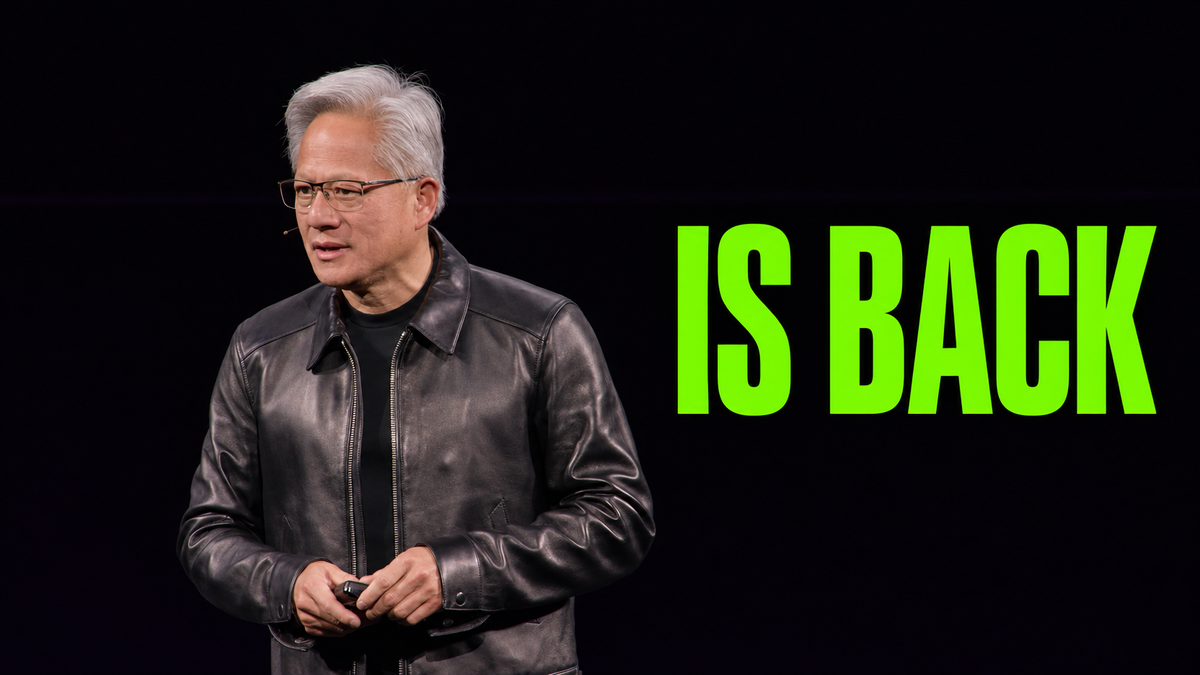
NVIDIA announced on 23 November that its board had voted unanimously to reinstate Jensen Huang as president, chief executive and a director. The decision reversed the board’s position just days after it had ruled out his return. Colette Kress, who served as interim chief executive, continued as chief financial officer, and Harvey C. Jones remained board chair.
The strongest business case for bringing Huang back was the cost of changing leaders at this particular moment. NVIDIA had begun shipping its Vera Rubin NVL72 systems and was expanding production capacity with suppliers. For a company selling AI infrastructure at that scale, the transition to a new generation depends on customers planning deployments and suppliers expanding capacity on compatible timelines. Huang had spent years steering NVIDIA’s chip roadmap and building the relationships behind it. A permanent change at the top would have added uncertainty while that work was already underway.
How much was riding on continuity?
NVIDIA reported $115.8 billion in quarterly revenue, of which $107.6 billion, roughly 93%, came from its Data Center business. That concentration helps explain why continuity mattered. The decisions that define NVIDIA’s AI business, from what it builds next to when it can deliver, affect how cloud providers and other customers plan their own investments. Huang’s value to the board was his ability to keep those decisions moving across NVIDIA, its suppliers and its customers.
Investors welcomed the decision. NVIDIA shares closed at $165.05 on 23 November, up more than 31% on the day, according to the Associated Press. The jump shows how strongly investors reacted to the news. The board gave its own explanation, saying it had regained confidence in Huang’s candour and ability to lead after meeting with him. It also said input from senior US government officials informed its assessment of national security risk.
The board still has work to do
NVIDIA said its independent directors would continue investigating reports that Huang had been targeted by a foreign intelligence effort. The company also formed a committee of independent directors to oversee national security and export controls and began a search for a chief compliance officer. Those measures put the board’s oversight in focus even as Huang resumes running the business.
Bringing Huang back gave NVIDIA continuity during a major product rollout. The speed of the reversal also exposed a succession question. If another leadership change comes at a difficult moment, how much of the work Huang does across product strategy, customers and suppliers can the rest of NVIDIA carry forward?